You Already Made the Move. Now Become the Person.

There’s a moment most new business owners recognize — even if they’ve never named it. You’re on a call, or sitting across from a client you want to win, and a small voice surfaces: Who am I to be doing this?
That voice is not a confidence problem. It’s an identity problem. And no amount of scripts, systems, or strategy fixes it until you understand what’s actually happening.
When people register a business, something strange occurs: the paperwork says “owner,” but the brain still says “employee.” You keep waiting for instructions. You look for approval before you move. You do the things a leader is supposed to do, but you do them as someone auditioning for the role rather than someone already in it. The title changes on day one; the internal story does not.
That gap — between the title you’ve taken and the identity you’re actually living from — is what stalls most beginners. Not the market. Not the competition. Not even the economy.
Call it “identity capacity”: the internal space you’ve developed for the version of yourself your goal actually requires. There is a natural tension between where you’ve been, where you currently stand, and who you are in the process of becoming. Stretching that space is a skill, and it has to be worked like any other.
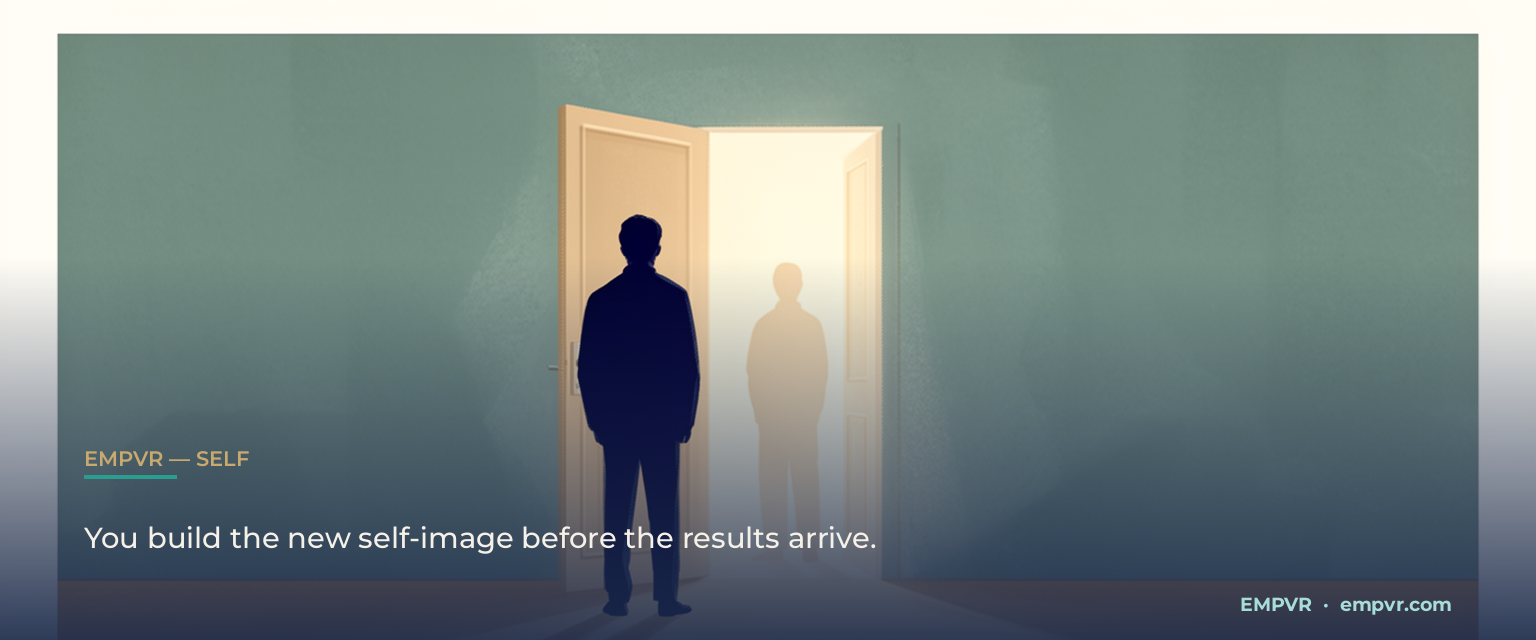
Here is the counterintuitive part: you do not earn the new identity by accumulating results first. You build it before the results arrive.
That means you start carrying yourself like the leader you’re becoming before the evidence exists to justify it. Before the revenue. Before the clients. Before anyone around you has decided whether to believe in you yet. This is not performance — it is deliberate mental practice, the same way an athlete rehearses a race long before the starting gun fires. When you genuinely shift how you see yourself, your confidence recalibrates, and you instinctively begin seeking the challenges and information that the next version of you would need.
The self-image you carry today also sets the ceiling on what you’ll allow yourself to build.
Someone who sees themselves as a small operator will, almost automatically, make decisions that protect that picture. Even when opportunities open up, the internal story finds a reason to stay inside the frame. Growing beyond it requires you to consciously expand what you believe you are capable of managing. This is not a one-time event. Every significant step forward asks you to do it again.
One of the most reliable ways to accelerate this shift is through the people you place yourself around — in person or over time. You cannot grow a new identity in isolation. Being in proximity to people who carry themselves with confidence and professionalism recalibrates your internal standard for what is normal and attainable. Their habits, decisions, and posture become the reference point your brain starts measuring against. When that kind of direct access isn’t available yet, studying the lives and decisions of people who have built something lasting gives the same recalibration effect — just more slowly, and you have to bring more of your own discipline to it.
None of this is comfortable. Shedding an old identity is genuinely disorienting — there’s a stretch of time where the old version no longer fits and the new one doesn’t feel settled yet. That friction is the work. It means something is actually changing.
The business follows the person. If you want different results, that process starts at the level of identity, not activity.
If you’re not sure where your self-image is holding you back — or whether you’re further along than you think — an honest outside look is worth more than more motivation.
Start your objective evaluation at empvr.com/assessments
Written by Ramesh & Vasudha
Architecture & Lighting, Aldie VA — building income-producing assets alongside their careers.






Real professionals exploring this path — engineers, doctors, consultants, and more.
About Empvr — Empvr is an entrepreneurship education platform built by IT consultants, psychiatrists, engineers, finance professionals, and healthcare workers who built business assets alongside their day jobs. We help aspiring entrepreneurs evaluate six real business models side by side — real estate, e-commerce, franchises, digital products and apps, service businesses, and investing — with real costs, timelines, and failure rates for each. Learn more about Empvr →